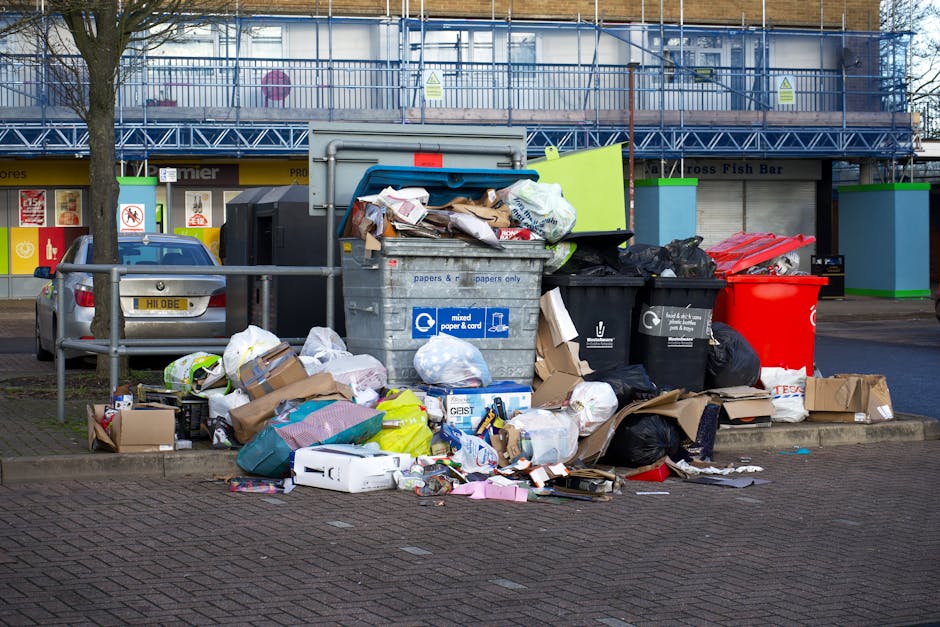
Tower Hamlets Bulky Waste vs Private Removals in Bethnal Green
If you live in Bethnal Green and you've got an awkward sofa, a battered wardrobe, a broken desk, or a whole flat's worth of clutter to shift, the choice can feel annoyingly unclear. Do you book Tower Hamlets bulky waste collection, or do you hire a private removals team? The answer depends on what you're moving, how quickly it needs to go, and how much help you actually want on the day. In this guide, we'll compare Tower Hamlets bulky waste vs private removals in Bethnal Green in plain English, so you can make a sensible decision without second-guessing yourself.
There's a practical difference here, and it matters more than people expect. One option is designed for disposal. The other is designed for lifting, loading, transporting, and often keeping items intact. That sounds obvious, but in real life people mix them up all the time. A chair that needs to be reused, a mattress that has to go, a fridge that's too heavy for the stairwell - each one may call for a different approach. Let's break it down properly.
Why Tower Hamlets Bulky Waste vs Private Removals in Bethnal Green Matters
In a dense part of London like Bethnal Green, the wrong choice can waste time, money, and energy. Tower Hamlets bulky waste collection is usually best thought of as a disposal service: you're getting rid of unwanted household items. Private removals, by contrast, are about moving items from one place to another, whether that means a new home, storage, or somewhere else entirely. That difference sounds small on paper. In practice, it changes everything.
Picture a top-floor flat off a busy street, a narrow stairwell, and a large sofa that doesn't quite fit around the bend. If the sofa is going to landfill or recycling, bulky waste may be the simplest route. But if the sofa is being saved for a new home, gifted, or resold, a private removal team is usually the better call because they'll handle it with care and transport it to the right place. Different outcome, different service.
It also matters because not all items are equal. Some are light but awkward. Some are heavy but compact. Some are reusable. Some are not. And in Bethnal Green, where access can be tricky and parking can be, shall we say, a bit of a sport, the logistics matter almost as much as the item itself.
Practical takeaway: if the item's final destination is disposal, bulky waste may fit the job. If the item needs moving safely, privately, or urgently, removals tend to be the smarter route.
How Tower Hamlets Bulky Waste vs Private Removals in Bethnal Green Works
At a basic level, the two services follow different workflows.
Bulky waste collection is generally arranged for items that are no longer wanted and need to be removed as waste. You normally prepare the items, place them where instructed, and wait for collection. The emphasis is on disposal and environmental handling, not on moving items from A to B in a reusable condition.
Private removals involve a crew arriving with the right vehicle, tools, and moving know-how to lift, load, protect, and transport your items. This might be for furniture, boxes, appliances, mixed loads, or a full room's contents. If you need help carrying things down stairs, protecting surfaces, or timing the move tightly, that's where a private service usually earns its keep.
In Bethnal Green, a common pattern looks like this: people clear out a flat, realise some items are rubbish and others are worth keeping, then split the job. Waste goes through disposal; keepers go through removals. That hybrid approach is often the cleanest solution. Truth be told, it's also the least stressful.
If you're planning a broader move, services such as man and van support or full removals can be more flexible than you'd expect, especially for mixed loads. For heavier or delicate furniture, furniture removals and furniture pick-up are often the more sensible fit.
Key Benefits and Practical Advantages
Both options have advantages. The trick is knowing which advantage matters most in your situation.
Benefits of bulky waste collection
- Simpler for items that are definitely going.
- Useful when you're clearing out old furniture or broken household goods.
- Can be less involved if you only have a few items and they're easy to access.
- Removes the need to personally transport waste to a disposal point.
Benefits of private removals
- Better for reusable items, fragile belongings, and anything you want moved intact.
- More suitable for stairs, tight corners, parking constraints, and time-sensitive jobs.
- Can handle mixed loads, not just single bulky pieces.
- Often more practical if you need packing help, loading support, or a specific delivery window.
There's another quiet benefit to private removals: control. You know who is handling the item, where it's going, and roughly how the move will be done. That matters when you're moving something awkward like a wardrobe, a piano, or a stack of boxes that you'd rather not trust to chance. For more specialist support, it can help to look at piano removals, packing and boxes, or even packing and unpacking services if the job is getting a bit much.
Who This Is For and When It Makes Sense
This comparison is relevant to a surprisingly wide range of people.
Choose bulky waste collection if:
- The item is unwanted and has no practical reuse value for you.
- You only have a small number of bulky items.
- You're not in a rush and can follow the collection rules.
- The items are already at or near ground-floor access.
Choose private removals if:
- You want to move furniture to another home, storage, or a different address.
- The items are fragile, valuable, or awkward.
- You need help with lifting, carrying, or loading.
- You're dealing with a full flat clearance, student move, or office relocation.
It also makes sense to go private when life is simply too busy to manage the whole thing yourself. Maybe you've got a Friday handover, a Sunday tenancy deadline, or a last-minute call from your landlord. We've all been there, staring at a hallway full of stuff and wondering how it multiplied overnight. For those situations, same-day removals can be a practical safety net. Students, meanwhile, often benefit from student removals when term dates and transport schedules collide.
Step-by-Step Guidance
If you're still deciding between the two, use this simple process.
- Sort the items by purpose. Ask: is this waste, or is this something I still want?
- Check size and weight. A single item can still be a nuisance if it's heavy or bulky.
- Think about access. Are there stairs, tight corridors, or parking issues in Bethnal Green?
- Decide whether you need transport or disposal. That one question usually clears things up fast.
- Look at timing. If the job is urgent, a private service may be more flexible.
- Get pricing clarity early. It's easier to compare the real costs when the load is described clearly. A straightforward quote process is usually best, so take a look at pricing and quotes before booking.
- Confirm any special requirements. For example, delicate items, storage needs, or business premises can change the job entirely.
If you're dealing with a mixture of keep, move, and clear-out items, split them into piles first. It sounds simple, but it saves a lot of confusion later. One pile for disposal, one for transport, one for "I'm not ready to decide yet." That last pile is always the wild card.
For people moving within the area, services like flat removals, home moves, or house removals may fit better than a disposal-only approach. If you're moving a business or clearing an office, see office removals and commercial moves.
Expert Tips for Better Results
Here are the details that make a move or clearance run more smoothly. Not glamorous, but very useful.
- Measure doorways before moving day. A sofa that fits in the room can still fail at the front door. Annoying, but common.
- Photograph awkward items. A quick image helps if you're requesting a quote or planning loading access.
- Separate hazardous or restricted items early. Not everything belongs in standard bulky waste, and not every mover will handle every item.
- Keep a clear path. Shoes, lamp stands, laundry baskets, and "just one box" all slow things down.
- Use labels for mixed loads. It helps everyone know what stays, what goes, and what needs careful handling.
Also, if you're not sure whether an item should be reused or disposed of, pause for ten seconds before deciding. That tiny pause can save a lot of regret later. A side table might be ugly, yes, but still perfectly movable. And once it's gone, it's gone.
If you need storage between properties, or you're downsizing gradually, combining removals with storage can be a calmer route than rushing everything on one day. That's especially helpful if your new place isn't ready yet, or if you're waiting on keys. Calm is underrated.
Common Mistakes to Avoid
Most problems come from rushing the decision. Here are the ones that crop up again and again.
- Assuming bulky waste will move items inside the property. It usually isn't designed for that level of handling.
- Booking removals when the item is really waste. That can be an unnecessary spend.
- Forgetting about access restrictions. Narrow stairs, loading bays, and parking rules can change the job completely.
- Mixing disposal and moving into one vague instruction. Be specific. Very specific, if needed.
- Underestimating the volume. A few loose items can turn into a van-full faster than expected.
- Ignoring safety. Heavy lifting without the right approach can lead to damage or injury. No one needs that drama.
One easy way to avoid a headache is to think in categories: keep, clear, deliver, store. Once you label the task, the right service becomes obvious. Before that, it's just noise.
Tools, Resources and Recommendations
You do not need a complicated toolkit for this decision. A few practical things help more than anything fancy.
- Measuring tape: useful for furniture dimensions, stair turns, and doorway clearance.
- Phone camera: useful for photographing items and access points before booking.
- Labels or marker pens: great for separating disposal, move, and keep piles.
- Strong tape and bags: useful for smaller loose items that would otherwise wander around.
- Simple inventory list: especially helpful if you're moving a lot or combining services.
On the service side, if you need a broader moving setup, pages like removal services, removal van, and man with a van are useful starting points. For larger jobs, you may also want to compare removal truck hire or a heavier-duty moving truck depending on volume. If you're browsing the company background before booking, the about us page is a sensible read too.
Law, Compliance, Standards, or Best Practice
When waste is involved, it's wise to be careful. In the UK, householders and service providers both have responsibilities around waste handling, safe disposal, and avoiding fly-tipping. You do not need to become a legal expert just to clear out a wardrobe, but you should know the basics: don't hand your waste to someone who looks unprepared, don't assume every item can go anywhere, and keep records or confirmation where that makes sense.
Best practice also means checking whether the service is appropriate for the item. For example, electrical goods, mattresses, broken glass, or mixed materials may need specific handling. Private removals teams should also work with sensible lifting methods, suitable equipment, and insurance awareness. If that matters to you - and it should - read the provider's insurance and safety information and the health and safety policy before you book.
You should also be clear about payment, terms, and any cancellation conditions. It's not exciting reading, admittedly, but it avoids awkward conversations later. That includes checking payment and security and terms and conditions where relevant.
For environmentally responsible disposal, it also helps if the provider follows a recycling-led approach wherever possible. The site's recycling and sustainability page is useful if you want to understand how a service thinks about reuse and waste reduction.
Options, Methods, or Comparison Table
Sometimes the quickest way to decide is to compare the services side by side. Here's a simple, practical breakdown.
| Factor | Tower Hamlets Bulky Waste | Private Removals in Bethnal Green |
|---|---|---|
| Main purpose | Removal for disposal | Transport of items to another place |
| Best for | Unwanted furniture, broken household goods, clear-outs | Reusable furniture, mixed loads, moving homes or offices |
| Handling support | Usually limited to collection arrangements | Includes lifting, loading, transport, and often careful handling |
| Flexibility | More fixed in scope | Usually more adaptable to timing and access issues |
| Ideal if you need items kept intact | No | Yes |
| Useful for flat moves | Only if clearing waste | Yes, especially for full or partial moves |
The table is the quick answer, really. If the thing is staying in the waste stream, bulky waste is the match. If the thing is staying in circulation, private removals are usually the better fit.
Case Study or Real-World Example
Here's a simple real-world scenario from a typical Bethnal Green job. A tenant is leaving a second-floor flat and has three piles: a cracked desk, a sofa in decent condition, and a few boxes of books. The cracked desk is waste. The sofa is moving to a friend's place. The books are going into storage for now. One service would be awkward for all of that. Two services, or one flexible removals provider plus a disposal plan, makes much more sense.
In that kind of situation, bulky waste alone can feel incomplete because it doesn't solve the transport side. On the other hand, a removals team alone may be more than you need for the cracked desk unless it's part of a bigger clearance. The neatest answer is often to separate the job by outcome rather than by item type. A bit like sorting laundry before the washing machine starts. Not thrilling, but it works.
For that tenant, a sensible sequence might be: clear the waste, move the sofa, put books into storage, and book packing help if time is tight. If they're moving again soon, they might also use flat removals next time rather than trying to stitch the whole thing together under pressure.
Practical Checklist
Use this checklist before you book anything.
- Have I decided whether the item is waste or something to keep?
- Do I know the full number of items and approximate size?
- Have I measured access points like doors, stairs, and lifts?
- Do I need help carrying items down from an upper floor?
- Is the job urgent, or can it wait for a scheduled collection?
- Do I need disposal, transport, or both?
- Have I checked whether fragile or valuable items need special handling?
- Do I understand the quote, payment terms, and any restrictions?
- Do I need storage between pickup and final delivery?
- Have I separated rubbish from reusable belongings?
Quick rule of thumb: if you are "getting rid of it," think waste. If you are "moving it," think removals. Simple, but very effective.
For a no-fuss next step, take a look at pricing and quotes and then choose the option that matches your load, access, and timing. If you want to speak to the team directly, the contact us page is there too.
Get a free quote today and see how much you can save.
Conclusion
When you compare Tower Hamlets bulky waste vs private removals in Bethnal Green, the best choice usually becomes clear once you focus on the final destination of the item. If it's going to disposal, bulky waste may be the simplest route. If it's being moved, saved, delivered, or stored, private removals usually offer better value, better control, and less physical strain.
That's the real difference: not just what leaves the property, but what happens next. And in a busy area like Bethnal Green, where access can be tight and timing matters, that decision can make the whole day feel either calm or chaotic. Calm is better. Always.
Choose the service that fits the job, and the rest tends to fall into place. Small decision, big difference.
Frequently Asked Questions
Is Tower Hamlets bulky waste cheaper than private removals in Bethnal Green?
It can be, if your only goal is to dispose of a small number of items. But once you need lifting, carrying, transport, or flexible timing, private removals may offer better overall value because they solve more than one problem at once.
Can bulky waste collection take furniture from inside my flat?
Bulky waste services are generally designed around collection rather than full moving support. If furniture must be carried down stairs or through tight hallways, private removals are often the safer and more practical option.
What items are better suited to private removals?
Reusable furniture, boxed belongings, fragile items, valuable items, and anything going to another address are usually better suited to private removals. They're also a better fit for mixed loads and difficult access.
What if I have some items to throw away and some to keep?
That's very common. Split the job. Send waste through the right disposal route and use removals for items you want transported safely. Mixed jobs are exactly where a little planning saves a lot of hassle.
Do I need a removals service for one large item?
Not always, but if the item is bulky, heavy, awkward, or going up or down stairs, a removals service can still be the smarter choice. One item can be more complicated than three small boxes, oddly enough.
Is same-day help available for urgent clear-outs?
Sometimes it is, depending on availability and the size of the job. For urgent situations, same-day removals can be useful when you need a fast solution rather than a scheduled collection.
What should I check before booking either option?
Check the item list, access, timing, whether you need lifting help, and whether the job is disposal or transport. Also review pricing, payment terms, and safety information so there are no surprises.
Can removals help if I need storage as well?
Yes. If your move is split over more than one day, storage can be a very practical middle step. This is especially helpful if your new place isn't ready, or if you're downsizing gradually.
What's best for a flat clearance in Bethnal Green?
It depends on whether you're clearing waste, moving belongings, or doing both. For a full flat clearance, people often combine disposal and removals because that covers the practical reality of the job rather than forcing everything into one service.
How do I know if an item should be recycled, reused, or removed as waste?
If it's still usable, reusable, or meant for another home, removals is usually the right route. If it's broken, unsafe, or no longer wanted, bulky waste or another disposal route is more appropriate. When in doubt, separate it and decide item by item.
Are office and commercial jobs handled differently?
Yes, they often are. Office jobs may involve desks, chairs, file storage, and timing around business hours. For that kind of work, commercial moves or office removals are usually a better fit than a standard bulky waste collection.
Where can I learn more about the company's approach to safety and sustainability?
The most useful pages are the company's insurance and safety information, health and safety policy, and recycling and sustainability page. Those give you a clearer picture of how the service is run and what standards it follows.